
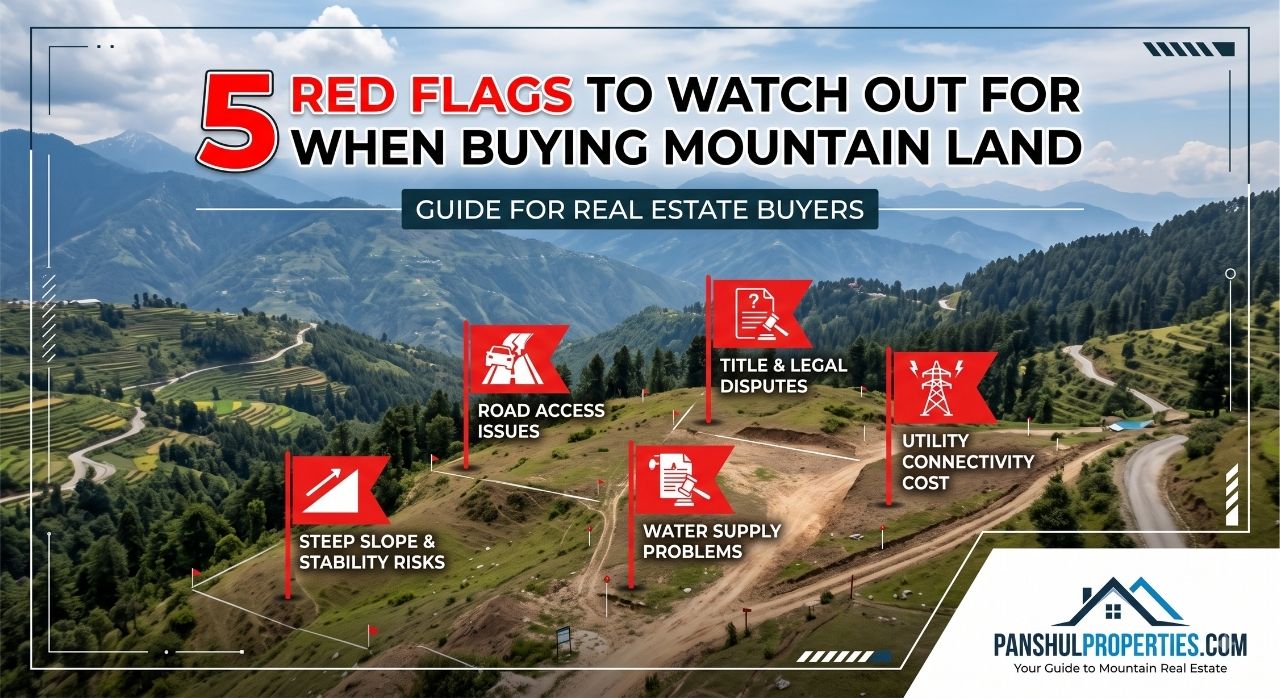
There is an undeniable allure to owning raw mountain land. The panoramic views, crisp high-altitude air, and the promise of a peaceful sanctuary make mountain plots some of the most sought-after real estate on the market.
However, buying hillside or alpine parcels is vastly different from purchasing standard suburban lots. What looks like an untouched paradise at first glance can quickly turn into a financial nightmare of unexpected site costs, legal disputes, and unbuildable ground.
Before committing your savings, here are the five critical red flags to watch out for when evaluating mountain land, curated by our team at Panshulproprties.com.
1. No Deeded Right-of-Way or Year-Round Road Access
Just because a dirt track leads to the property does not mean you legally or physically have year-round access.
Landlocked Parcels: Mountain land often borders private holdings, forest land, or ancestral trails. If the deed does not explicitly include a legally recorded, transferable easement or right-of-way, you could find yourself locked in expensive disputes with neighbors.
Seasonal Access Issues: A road accessible during dry summer months may turn into an impassable mudslide during monsoon season or become completely blocked under winter snow.
Road Maintenance Agreements: Check whether local municipalities maintain the road or if access depends on private road-maintenance agreements among property owners.
2. Excessive Slope and Unverified Soil Stability
A dramatic incline might offer unmatched valley views, but steep terrain can easily double or triple your overall construction and foundation costs.
High Risk of Landslides & Erosion: Slopes with loose topsoil or signs of past erosion pose extreme safety hazards. Look for telltale signs such as “pistol-butted” trees (trunks curving upward from unstable shifting ground).
Massive Excavation and Retaining Wall Costs: Building on severe slopes requires extensive grading, deep piling, and heavy-duty retaining walls, which can run into tens of thousands of dollars before a single wall is framed.
Hidden Bedrock: A thin layer of dirt sitting over solid rock can necessitate heavy hydraulic drilling or blasting just to dig basic footings.
Pro Tip: Never finalize a mountain land purchase without a professional topographic survey and a geotechnical soil report.
3. Ambiguous Water Rights or Failed Soil Percolation
You can haul building materials up a mountain, but living there without a sustainable, legal water and waste solution is impossible.
Unverified Groundwater: Mountain water tables are notoriously unpredictable. Relying on an “assumed” underground spring or high water table can result in drilling hundreds of feet down with zero water yield.
Lack of Municipal Supply: If the property cannot connect to local municipal lines, verify water harvesting allowances or natural perennial spring rights.
Failed Perc Tests: If municipal sewage is unavailable, your land must support a septic tank or bio-digester system. Rocky, clay-heavy, or overly steep soil often fails percolation (perc) tests, making standard septic installation unfeasible.
4. Hidden Zoning, Forest Boundaries, and Local Land Restrictions
Mountain regions are subject to strict ecological protections, zoning overlays, and state-specific ownership laws.
| Issue | What to Check For | Risk Factor |
| Forest/Eco-Sensitive Buffers | Proximity to demarcated state forest or reserve land | Strict construction bans within 50–100m buffers |
| State Land Ownership Laws | Special permits (e.g., Section 118 in Himachal Pradesh) | Inability to register or legally hold title |
| Zoning Restrictions | Agricultural vs. Residential classification | Massive conversion fees or building caps |
| Wildfire & Drainage Corridors | Proximity to natural seasonal streams (khads) | Severe building setbacks and high insurance rates |
5. “Nearby” Utilities That Cost a Fortune to Extend
Sellers frequently advertise that “electricity and water are nearby.” In the mountains, “nearby” can still mean an astronomical installation bill.
Power Pole Extensions: Bringing electricity just a few hundred meters across steep elevation can require multiple new utility poles, transformers, and line clearings.
Trenching Logistics: Digging utility trenches through rocky terrain requires specialized heavy machinery, driving up labor and equipment transit costs.
Internet and Connectivity: Check mobile tower reception and fiber availability. In mountain valleys, blind spots are common and can make remote work difficult without expensive satellite setups.
The Golden Rule: Perform Due Diligence First
Buying mountain property should be an exciting milestone, not a financial trap. Always work with local surveyors, legal advisors, and verified property platforms that verify clear titles, soil feasibility, and regulatory permissions before listing.
Looking for vetted, clear-title mountain plots and holiday home destinations? Explore our verified listings and buyer resources today at Panshulproprties.com.
