
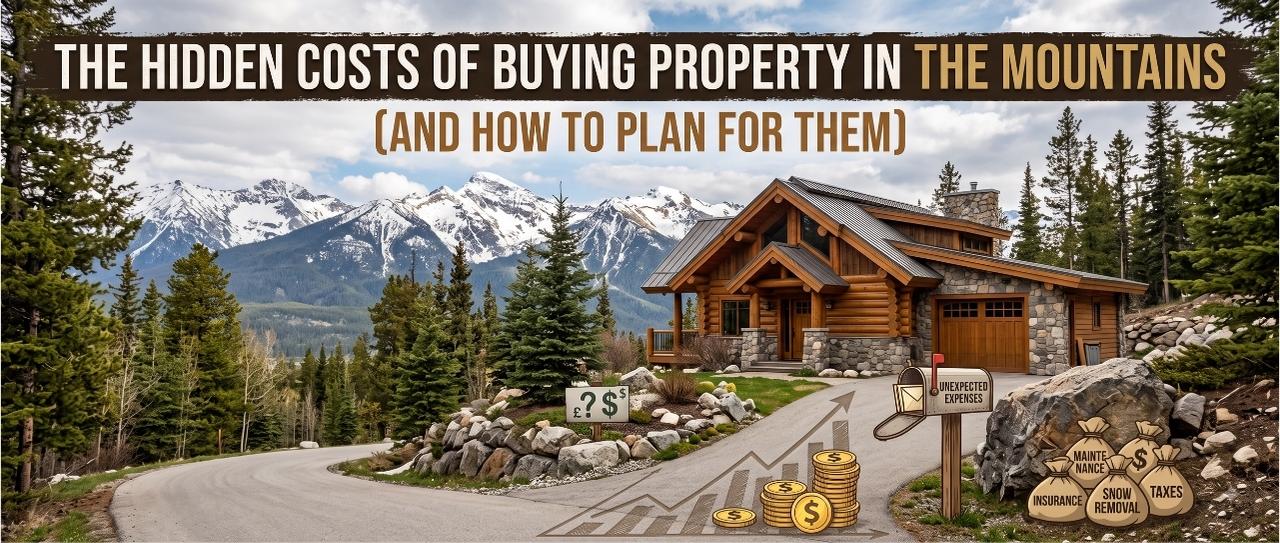
There is an undeniable romance to owning a home in the mountains. Waking up to crisp air, sweeping alpine views, and the quiet serenity of nature is a dream for many. However, transitioning that dream into a reality—whether buying a plot to build on or purchasing an existing hillside property—comes with a unique set of financial realities that rarely exist in flat, suburban neighborhoods.
Before you sign the deed to that perfect slice of high-altitude paradise, it is crucial to look past the scenery and understand the hidden expenses of mountain real estate.
1. Site Preparation and Foundation Engineering
Buying a sloping piece of land with a killer view might seem like a great deal, but preparing that land for construction can quickly consume your budget.
Mountain terrain is rarely flat and ready for building; you will likely need to pay for extensive excavation, tree removal, and even rock blasting to prep the site.
Mountain geology is highly unpredictable, often containing unstable slopes, expansive soils, and solid rock outcroppings within the exact same building footprint.
Retaining walls are typically the largest extra expense on a sloping site, costing anywhere from $20,000 for modest needs to over $150,000 for complex properties.
The steepness of the terrain drastically dictates the price: a modest slope might add 10% to 20% to your build costs, a moderate slope adds 30% to 50%, and a steep slope can easily double the overall cost of construction.
2. Utilities and Off-Grid Infrastructure
City lots are usually “plug-and-play” when it comes to utilities. Mountain lots require you to bring the infrastructure to the site yourself.
Because remote mountain properties rarely have easy access to municipal utilities, you may have to pay to drill a private well, install a septic system, and extend power lines to your property line.
Trenching long distances for cables or paying for transformer upgrades to get electricity to your home can add massive, unexpected expenses.
Even when utilities are nearby, providers frequently charge connection fees, or you may be required to pay for costly upgrades if the existing systems cannot handle your home’s needs.
3. Permits, Compliance, and Environmental Regulations
Building in the mountains involves navigating a strict maze of local regulations designed to protect delicate ecosystems.
You will likely face a layered, drawn-out approval process that includes environmental reviews, county-specific building overlays, and wildlife impact studies.
The fees for zoning approvals, environmental clearances, and safety certifications can add thousands of dollars to your initial budget.
Wildfire mitigation standards are strictly enforced in many mountain regions, legally requiring you to use specific fire-resistant building materials, plan emergency access routes, and clear defensible space around your home.
4. Labor Shortages and Logistics
Getting workers, heavy machinery, and raw materials up a winding mountain pass is an expensive logistical hurdle.
Mountain roads are often narrow, steep, and lack staging space, which means heavy equipment like concrete trucks and cranes might require alternative positioning, or materials may need to be split into smaller, multiple deliveries.
Because skilled tradespeople (like carpenters, electricians, and plumbers) are in high demand but low supply in mountain towns, you should expect labor to cost 20% to 30% more than in city markets.
Transporting materials to remote locations incurs hefty freight charges, so buyers need to add 10% to 15% to their budget purely for delivery, warehousing, and transportation.
5. Designing for Extreme Weather
A mountain home cannot be built like a standard suburban house; it must be engineered as a fortress against the elements.
Higher elevations demand significant structural reinforcements, meaning your roof design, framing, and connections must be specially engineered to withstand heavy snow accumulation and high winds.
Unpredictable mountain weather—like sudden snowstorms or spring mud seasons—can halt construction for months, which delays timelines, impacts labor efficiency, and increases overhead costs.
How to Plan (and Budget) for the Hidden Costs
If you want your mountain home dream to become a reality without bankrupting you, proactive planning is mandatory.
Order a Geotechnical Report: Before you purchase the land, spend the $2,000 to $5,000 required for a thorough geotechnical investigation. A proper soil test and topographic survey can prevent you from buying an unbuildable or prohibitively expensive lot.
Embrace the Slope in Your Design: Instead of fighting the terrain with massive excavation and expensive benched concrete slabs, consider a split-level design that steps down the hill, or utilize pole/pile foundations that lift the structure above the slope.
Build a Robust Contingency Fund: You cannot plan for everything, so your budget must reflect the unknowns. Set aside 15% to 20% of your construction budget strictly for site condition surprises. Additionally, reserve $10,000 to $20,000 for permitting fees and compliance upgrades, and 5% to 10% for weather-related delays.
Hire Local Experts: Work with architects, designers, and builders who specialize in mountain municipalities. They already know the local building codes, understand the terrain, and can book trades early to help you avoid expensive mid-project changes.
)